Knowledge & advice
Hiding an air conditioner in the living room: how to do it
An air conditioner in the living room is comfortable, but the pipes and the outdoor unit do not always fit nicely into the interior. Many people wonder how to hide an air conditioner as neatly as possible. In this article we explain the main options, from concealing the pipework to hiding the indoor unit itself.
What can you hide with an air conditioner?
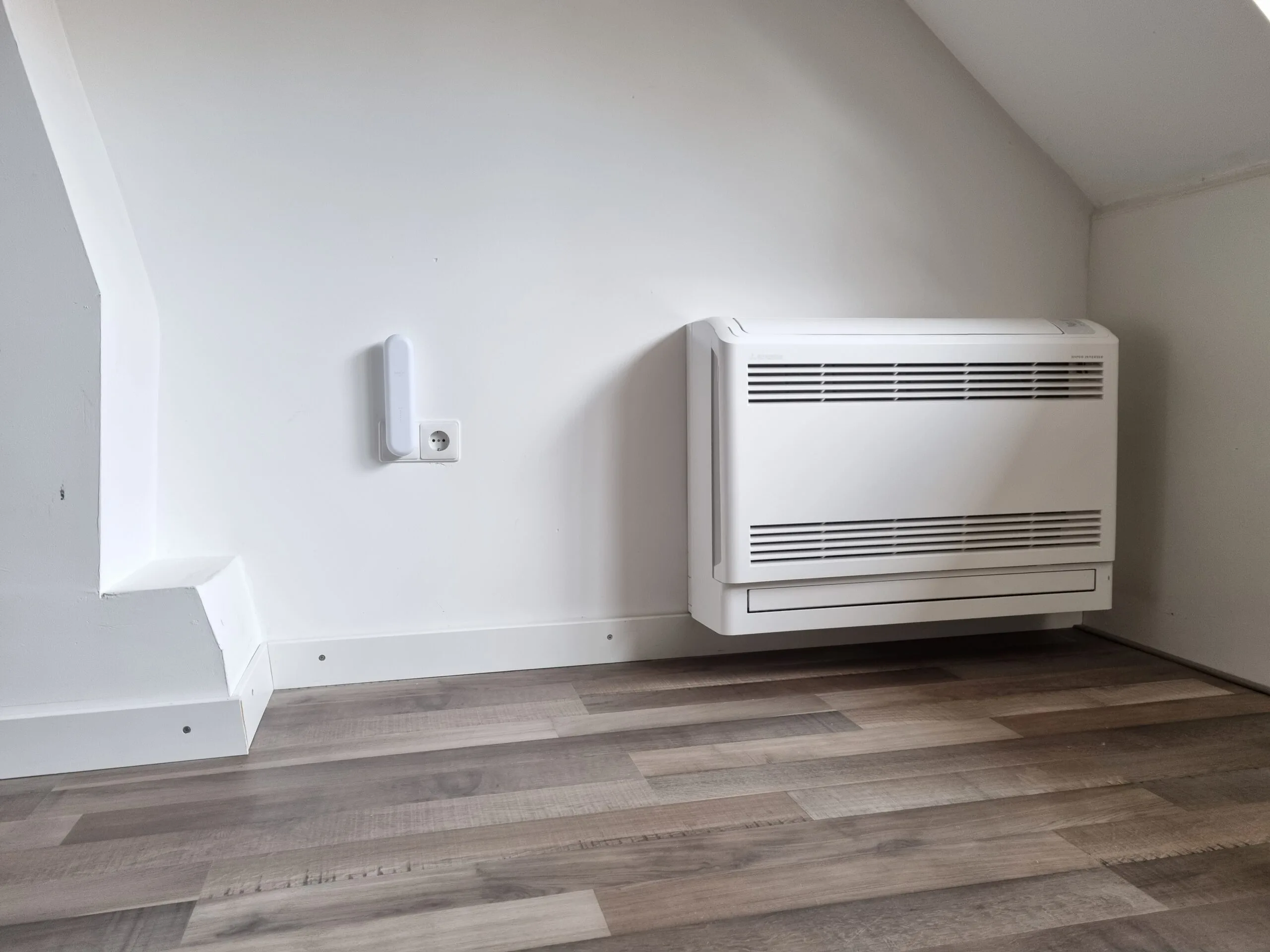
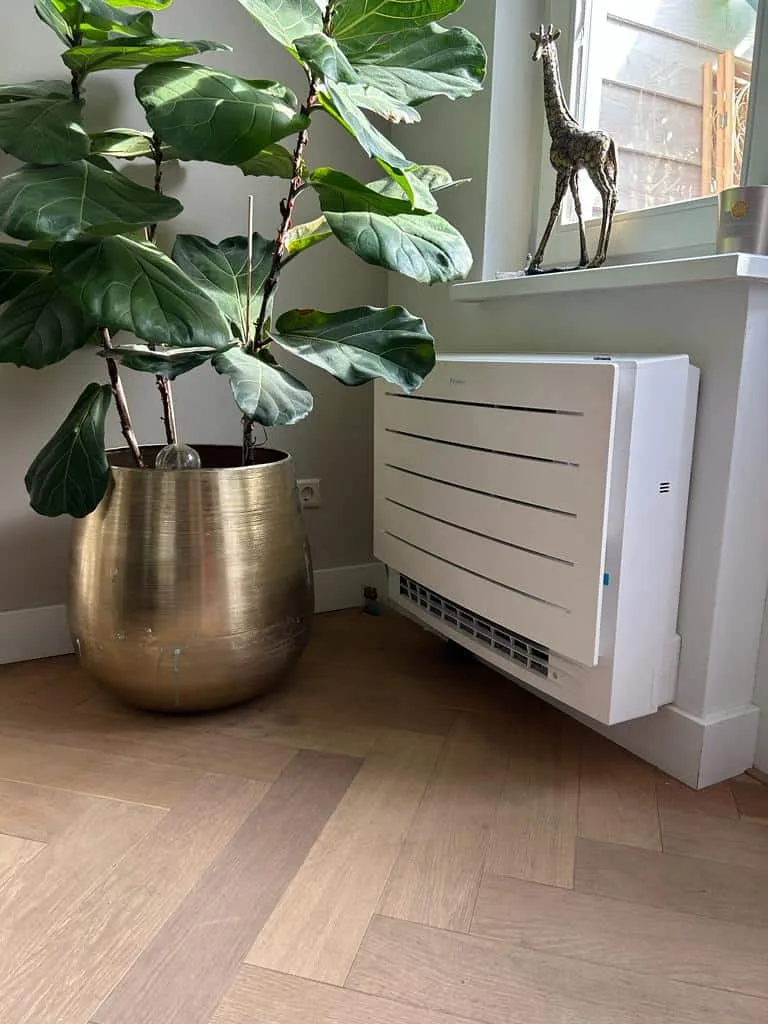
With a split-unit air conditioner, three parts can be visible: the indoor unit on the wall, the pipework between the indoor and outdoor unit, and the outdoor unit on the facade. The indoor unit is usually the most visible part and draws the most attention in the living room. The pipework runs along the wall to the outside and is visible if it is not concealed. The outdoor unit on the facade is visible from outside and does not look good on some homes.
Concealing the pipework
The pipework is the connecting line between the indoor unit and the outdoor unit. This is the most common aesthetic challenge with an air conditioner installation in the living room. There are three ways to deal with it.
The most common solution is a cable trunking mounted along the wall. This is the quickest and cheapest option. Modern trunking is available in white and can be painted in the colour of the wall, so it hardly stands out. A more elegant but more expensive solution is to chase the pipes into the wall. The pipes are then laid completely out of sight in the structure, and only the connection points remain visible. This takes more work and is best suited to a renovation or new build where the walls are open anyway. A third option is to route the pipes through a suspended ceiling or a lowered section of ceiling. This is widely used in commercial settings, but can also give a sleek look in living rooms.
Hiding or building in the indoor unit
The indoor unit itself is harder to hide because it needs free air circulation to work properly. Still, there are a few options.
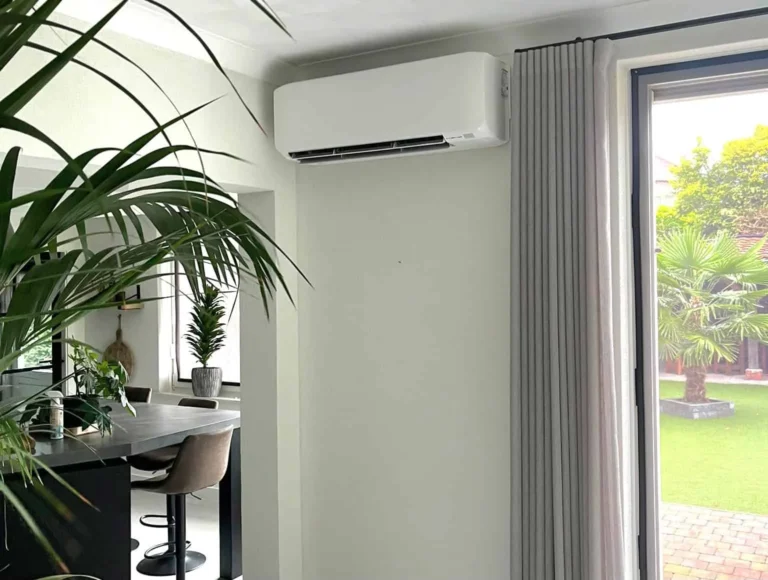
A popular approach is to place the indoor unit in a recess or wall cabinet built specially for the air conditioner. The cabinet has grilles at the front and bottom for air circulation. This gives a sleek, built-in look. Some manufacturers also offer decorative front panels that visually match the indoor unit to the interior. Daikin offers models in the Stylish and Emura series that are deliberately designed as design objects, so they are less likely to be hidden and instead act as an interior accent.
Another option is to choose a ducted unit or a cassette unit. With a ducted unit, the indoor unit is completely hidden in the structure and only the air outlet grilles are visible. With a cassette unit, the unit is concealed in a suspended ceiling. Both options give the sleekest look, but are more complex and costly to install.
Concealing the outdoor unit on the facade
The outdoor unit must always be placed outside and needs free air circulation. Hiding it completely is therefore not possible, but there are ways to limit its impact.
Placing it on the side or rear facade is the most obvious solution. The outdoor unit is then hardly or not at all visible from the street. Placing it on the roof is another option, especially for apartments or homes where no suitable facade position is available. Special enclosures made of wood or aluminium are available that hide the outdoor unit from view while keeping the air circulation intact. Make sure the enclosure leaves enough space for the air inlet and outlet, otherwise the air conditioner will perform less well.
Practical tips for a neat installation
Discuss the placement and the pipework in detail with your installer beforehand. Good preparation prevents the pipes from ending up in an unfavourable spot afterwards. Choose an indoor unit in a colour that suits your interior. White is the standard colour, but brands such as Daikin also offer black and silver versions. Consider a ducted unit or cassette unit if aesthetics are your top priority and you are willing to invest extra. Always have the installer conceal the pipes as part of the installation, so that it is done professionally and watertight.
Having your air conditioner concealed by Aircobrabant
On every installation, Aircobrabant pays attention as standard to the finishing of the pipework. Our engineers conceal the pipes as neatly as possible in cable trunking or, where possible, in the wall. Do you want a fully concealed installation using chasing or a ducted unit? Then we will discuss this during the survey and draw up a tailored quote.
Frequently asked questions
Can I have the pipes of my air conditioner chased into the wall?
Yes, chasing the pipes in is possible, but it takes more work than cable trunking and is best suited to a renovation where the walls are open anyway. During the survey, our advisers assess whether chasing is feasible in your situation.
Which type of air conditioner is most suitable for a sleek look?
A ducted unit is the sleekest solution: completely hidden in the structure with only grilles visible. A cassette unit is the best option for rooms with a suspended ceiling. For living rooms without a suspended ceiling, a design model such as the Daikin Stylish or Emura is an attractive alternative.
Am I allowed to place the outdoor unit of my air conditioner on the front facade?
In many municipalities, placing it on the front facade requires a permit or is not allowed. Our advisers assess this during the survey and inform you about the rules in your municipality.